Hold a provincial licence.
Anyone paid to protect people or property needs one.
That includes patrol guards, concierge security, event staff, bouncers, bodyguards and loss prevention.

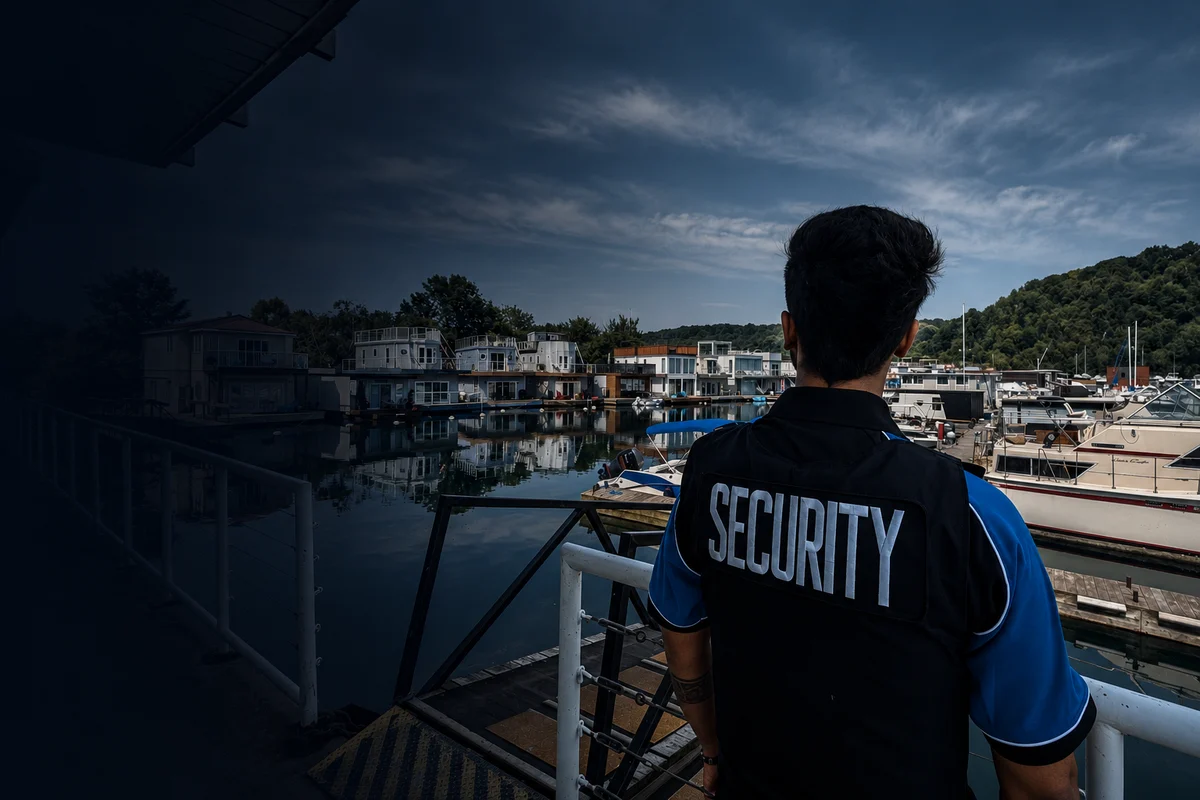
Hiring security guards in Ontario
Every security guard and security company in Ontario is regulated by the province under the Private Security and Investigative Services Act, 2005 (PSISA). Here's a plain-English guide to what a real, licensed guard looks like, what they can do, and what they can't.
Printable. Bring it to your meetings with security companies.
The basics
Anyone paid to protect people or property needs one.
That includes patrol guards, concierge security, event staff, bouncers, bodyguards and loss prevention.
Guards must identify themselves as a security guard and produce their licence when a member of the public asks.
To get licensed, a guard must be 18+.
They must complete the government training course (including Emergency First Aid), pass a provincial exam, have a clean criminal record, and be legally allowed to work in Canada.
The company itself also needs a provincial agency licence.
The uniform
Ontario has strict uniform rules so the public can instantly tell a security guard apart from the police. Most guards must be in uniform while working.
Bodyguards and loss prevention staff are the exceptions and can work in plain clothes, but they still need a licence.
The security company that employs the guard.
Capital letters at least 1.5 cm tall, in a colour that stands out from the uniform.
So you always know who you're dealing with.
Capital letters at least 10 cm tall, in a contrasting colour. Collared shirts, sweaters and blazers don't need back lettering.
If it looks like a police uniform, it isn't allowed. A real guard should look clearly like security, not police.
What guards can do
Security guards are not police. They don't have police powers. Legally, they have the same arrest powers as any citizen, plus the authority you (the property owner) give them to control your property.
Equipment
Allowed only if issued by the guard's security company.
Allowed only if issued by the company, and only for self-defence.
Never allowed as restraints.
Most guards carry a radio, flashlight, notebook and phone. At KingsGuard, our guards also wear Axon body cameras and log their patrols in TrackTik, so you get a clear record of what happened on every shift.
Security guard vs police
| Row | Security Guard | Police |
|---|---|---|
| Who they work for | Your property / your security company | The public |
| Main job | Observe, deter, record and report | Enforce the law |
| Arrest powers | Same as any citizen, plus trespass on your property | Full police powers |
| Can investigate crimes and lay charges | No | Yes |
| Uniform | Must look different from police | Police uniform |
Hiring checklist
Printable. Bring it to your meetings with security companies.
Complaints
Anyone can file a public complaint with the province's Private Security and Investigative Services Branch (PSISB) against a licensed guard or security company. The province can investigate, issue warnings, lay charges or revoke a licence. Breaking the PSISA can mean fines of up to $25,000, up to a year in jail, or both.
How to file a complaintThe KingsGuard standard
Every KingsGuard guard is provincially licensed and wears a fully compliant uniform. Ask any of our guards for their licence and they'll show it.
Axon body cameras and TrackTik patrol tracking mean every round and every incident is recorded.
Guards, monitored cameras, virtual monitoring, parking enforcement and more, from one company.
Questions
This guide is a plain-language summary for general information only and isn't legal advice. For the full rules, see the Private Security and Investigative Services Act, 2005 and its regulations, including O. Reg. 362/07 (Uniforms), O. Reg. 363/07 (Code of Conduct) and O. Reg. 366/07 (Equipment). Last reviewed: October 2026. Links: PSISA · Uniforms regulation · Equipment regulation